

The TV Scholar interview series brings real-life television scholars to my newsletter to discuss their journey to television studies, share nuggets of wisdom from their research, and obviously, chit-chat about television itself.
This time around I interviewed Steph Herold, MPH, Research Analyst and lead researcher of the Abortion Onscreen team, studying the portrayal of abortion on television and in film at the University of California, San Francisco. I highly recommend perusing the Abortion Onscreen Database, which diligently catalogues abortion storylines on TV and film (you can also sort them by a few filters including genre, character race, and outcome).
Before we get into it: What are your foundational TV shows?
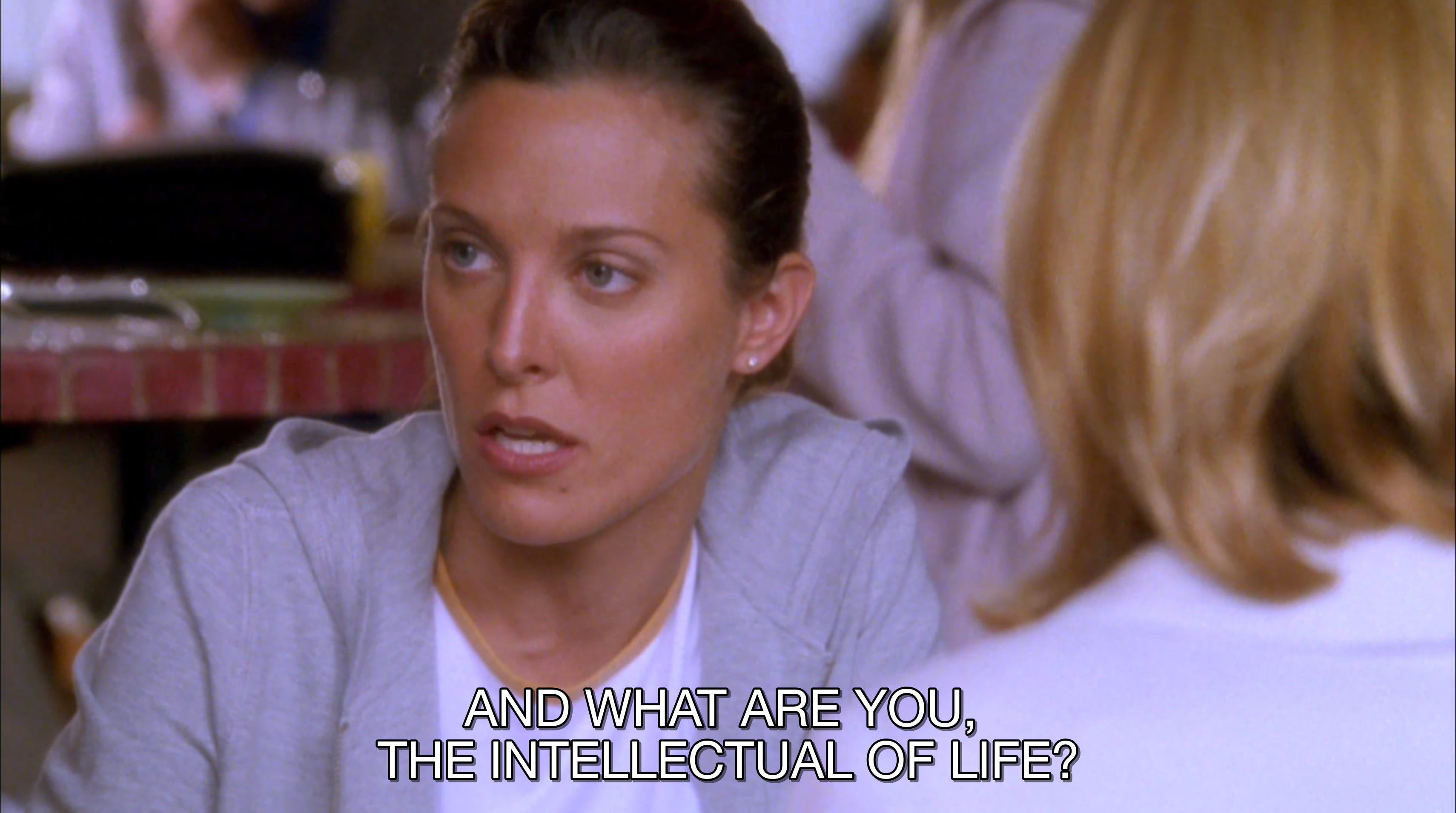
The L Word, definitely watched that secretly in my basement, and just loved seeing queer characters on TV. I feel so envious of young queer kids who have Heated Rivalry now. Like, did you know that we had nothing before? Or not nothing, but we had to watch secretly in the basement! We had to hope our parents didn’t cancel the channel. Definitely Sex in the City. Carrie as kind of an insufferable writer, like oh, relatable. Also Clarissa Explains it All, which I watched religiously after school.
Can you tell me about your trajectory and how you ended up engaging in research around abortion on screen?
I started off in a totally not academic setting. My first job, while I was in college, was working as a counselor at an abortion clinic. I would tell people what to expect and I was always really struck by the myths and misinformation people brought into the clinic. They showed up for their appointment even though they thought something might go horribly wrong. I would have a conversation with them about how that’s most likely not the case: They were going to be able to have children later if they wanted, they were not going to get cancer, or all these things that people come in with. After hearing these things day in and day out, I really started to wonder where people got it all from.
I was working in Pennsylvania where at the time there were a bunch of abortion restrictions—thankfully some of them don't exist anymore. Eventually, it got me thinking about the role of pop culture in the information people have about abortion that aren't talked about a lot in public. So people may rely on media to get their information. Not fully, people get their information about abortion from a ton of places, especially across the internet. But it led me to this path of research, that's how I got really curious about it.
How did you get involved in the Abortion Onscreen Database with the University of California San Francisco?
My good friend Gretchen Sisson started it alongside our colleague Katrina Kimport, and at the time I was really focused on abortion stigma research. I was trying to figure out why do so many people think they should feel bad about their abortions when, in reality, most people actually feel relieved after. What's the disconnect there? Where does that idea about shame come from? Eventually, I wanted to transition away from that stigma work and do something a little more concrete; stigma is really important but an amorphous concept. Gretchen wanted somebody to help her with her work, so I hopped on board.
There is a lot of abortion that's really well studied and really well-documented, especially as a healthcare experience. Literally decades of abortion safety literature and lots of information about abortion as a healthcare experience, as a policy issue, but very little about abortion as a cultural issue.
Have you found there are ways and nuances that abortion is represented in television versus film?
Yeah, I think there are a lot of differences, there's a lot of work to be done to understand the full scope of the differences. Films are such a long-form medium by nature, they can tell more in-depth stories. There are many more films, especially over the last decade or two, about people who need to overcome barriers to abortion access to get the abortions that they want and need. So movies like Never Rarely Sometimes Always, Unpregnant, Grandma. That's the main thrust of the film, a character trying to get an abortion.
We’ve actually never had a whole TV show that's about abortion or an abortion clinic staff or anything like that. There's really no TV show where the whole thing is about someone getting an abortion. Often, abortion is a subplot that lasts maybe a couple of episodes if you're lucky. Often, audiences don't even remember that they've seen a character have an abortion. It'll be like maybe a one-off character of the week, like on a Grey's Anatomy or The Pitt episode, then it doesn't come up very much again. So it does seem that the breadth and depth are very different, but for some reason I really gravitate towards TV because the audience is just much broader. It turns out that people who go to see those movies are already pretty supportive of abortion. So I'm really curious about when abortion seeps into these more mainstream shows. What do people make of it?
What are some of the oldest representations of abortions?
So the earliest in film that we have is from 20th century silent films. There are some abortion plot lines there, with characters who almost have abortions and then don't. Then there's Where Are My Children in 1916, loosely based on Margaret Sanger's trial for indecency for sharing birth control information. On TV, the earliest we have are the black and white shows of the early 60s like The Defenders and The Nurses, where there’s like one episode about abortion or an illegal abortion provider.
A lot of people will say Maude in 1972 was really the first abortion on TV. There was abortion on TV a decade before that, but I still think that Maude is really important for many reasons. It was the first time a show really focused on the character who had the abortion and not on the policy environment or the doctor, the lawyer, or the husband. Also, the first legal abortion on TV, the first abortion on a comedy, not just a drama or legal show, and it really showed her getting support from everyone in her life. There are also a lot of soap operas that covered abortion way before broadcast TV did.
How do you think the way abortion has been represented on TV shifted?
Abortion used to be, especially in the early days of TV, portrayed as something that was broadly illegal and dangerous. Women needed to be rescued from these terrible, unscrupulous, immoral providers. It was always their dad or their brother or a lawyer, all men, who needed to rescue them. It's really changed since then, in real life and on screen. Most often now when a character has an abortion on TV, it's usually safe. The conflict in the drama is not about whether she's going to die or not, unless it's a TV show like Call the Midwife, where it's set at a time when abortion is illegal. More often than not, abortion is not something that's life threatening.
Often the drama now is not, will she get the abortion or won't she get the abortion? It's, how will the abortion affect her relationships? Who will she share it with? How will it affect her career or her education or how she thinks about herself? The moral panic is usually removed. That’s a really big shift.
What’s missing is we still don't have many shows that represent the reality of abortion access in the U.S. in terms of the barriers to care. Not just in a post-Dobbs 2022 way. Abortion has been really hard for most people to afford since the 70s. We very rarely see characters try to figure out if they have insurance coverage of abortion, how they're going to pay for it, how they're going to take off work, who will watch their kids. Very few family dramas or comedies have their mom characters ever think about having an abortion. In reality, most people who have abortions are raising kids. So there are a lot of pieces that still need to be filled in, but it really has changed a lot over time.
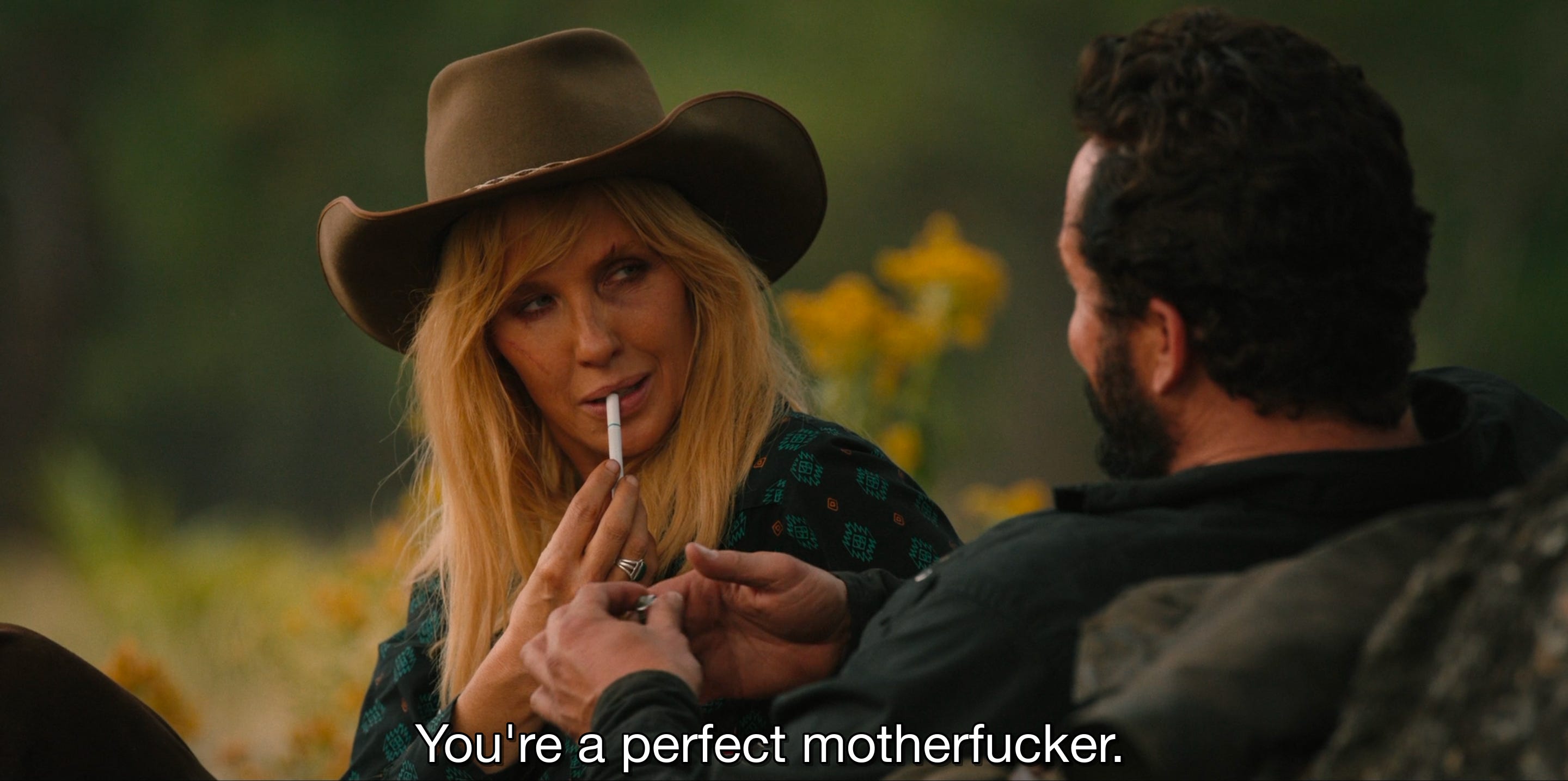
You’ve previously spoken with Vulture about the limits of how representation can actually impact policy, from algorithm silos to the push-and-pull of progress and regression. I think all the time about Beth’s abortion on Yellowstone and how it shined this light on the sterilization of Indigenous women which would have been shown to an audience who may not see abortion storylines very often…
I'm really curious about the dichotomy between the increase in abortion storylines that we've seen versus the tremendous shift backwards in abortion rights. It seems very clear to me that there's no causal relationship between culture and politics. I think a lot of people hope that the more abortion storytelling we can do in media, the better things will be. But that's a long-term game, it's really hard to make short-term connections. Like you said, who watches Grey's Anatomy versus who watches Yellowstone or Law & Order? People tend to watch TV shows that confirm what they believe instead of challenge what they believe. What we know is that for TV to actually have an impact on people's attitudes or behaviour, it has to be a character that they like, a character that they really know, that they feel is their friend, and the abortion has to keep coming up.
I've found that people will sometimes remember, like oh yeah, Olivia Pope had an abortion. If you ask people who've seen Scandal, sometimes they'll remember because it was actually on screen. We actually see her have the abortion, but then it never comes up again, so it doesn't really inform her character or her actions. Yellowstone is such an interesting example to me because it does come up often, and I'm sure people remember that about Beth. I'm so curious what they take away from that abortion because it's such a wound for that character. What I'm most curious about is if there's any way that we can help people be more supportive of the people in their life as a result of seeing support depicted on TV.
I’m also curious about the portrayals of abortion outside of a Western context.
Every year I write this report where I look back on the year’s abortion portrayals, so I track as best I can. There are so many more shows available to audiences in the U.S. now, in Canada too, I'm sure. I'm including Korean soap operas, Chinese soap operas, Mexican telenovelas, a lot of Indian soap operas, and the way that they talk about abortion is so different. I would love somebody who has that cultural context and knowledge to analyze them, because it seems like in many of those, abortion is brought up as an option and then refused on moral grounds, or someone tries to coerce someone else into having an abortion, or there's a magical miscarriage, where someone is pregnant and as soon as they're about to have the abortion, they miscarry. Or it turns out they weren't pregnant at all.
What guidance do you have for a writer working on an abortion scene?
I think there's a lot of pressure to get it right, and I hope that my work doesn't add to that. What I hope is that writers don't feel they have to make this composite of a perfect abortion patient that's exactly accurate to what you know the experience is in real life, and instead really lean into the emotion of it. Thinking about the caretaking piece, the financial piece, the logistical access piece, and let that character tell a friend about it. Let it be not just a single story, have there be things that grow out of the abortion experience. I don't think there really are “very special episodes” anymore, but sometimes when abortion comes up, it feels that way, and I wish it was just a part of a story or a part of who a character is.
Also, people really seem to notice when shows get it wrong, especially in terms of policy, which I didn't expect. I did one study looking at YouTube comments under a lot of popular clips of abortion scenes, and I was really surprised that people were very critical. Like The Pitt had this abortion storyline that happened over a couple of episodes, but people noticed that they didn't talk about many abortion restrictions. Like, why is that the case if it's in Pennsylvania? Isn't it harder to get there? So just thinking about that policy context.
There are a lot of resources. There are organizations like Abortion in America that have abortion storytellers and people who have experienced trying to get an abortion in this post-Roe America, who I know would love to talk to writers. There are groups like Hollywood, Health and Society that often connect writers to experts, whether it's abortion providers or researchers like me. I'm always happy to point writers in the right direction if they need to talk to somebody who's had a direct experience as a patient or a provider.
Before I let you go: What’s your favourite TV-watching snack?
Pretzels and Nutella. Salty and sweet.
Such great work, thanks for writing about it!
"We actually see her have the abortion, but then it never comes up again, so it doesn't really inform her character or her actions."
What matters is that we have different realities be portrayed, which seems to be the case - for Beth in Yellowstone, it's a wound. Okay, fair. For many people it really isn't a wound and informs nothing of what they do, and I grew up with the only representation available as a dramatic choice that we were supposed to carry regret or shame about, so I'm glad to know Olivia Pope doesn't care - cause neither do I, haha