

what are they watching? is an interview series for my newsletter in which I chat with a television creative about television itself. Previous interviews include Janicza Bravo, Chelsea Peretti, and Jeff Hiller.
This time around, I had the pleasure of speaking with Georgi Banks-Davies, who directs every episode of The Night Manager’s second season, which is now streaming on Prime Video (with new episodes every Sunday through January). She also directed the first season of I Hate Suzie (ICONIC TO ME), Kaos, and Paper Girls.
Before we jump into my other questions, what are you watching lately?
I have just finished the Claire Danes show The Beast in Me which I thought was so fantastically executed. The tone of that show is the most confident thing I’ve seen in years. It’s just so fun but also so dark. Sometimes you watch something and you just know the actors are having a really good time, and that’s what those two lead actors in that show look like they’re doing. I’m desperately awaiting the next season of The Studio because I’ve never seen anything so accurate about the film business, but in a really heightened way…I kind of want a role on it? The oner episode, I was literally screaming at the television. I heard that Seth Rogen is getting so many requests from directors’ agents now for their clients to star in the show for fake director projects [Laughs]. I get it.
My one critique of The Studio, which I’d love to get your take on, is that it never seemed like the projects those directors were working on were actually accurate to what they make in real life?
Maybe that’s purposeful, because otherwise it’s potentially a little too close to home...or maybe it’s their secret ambitions. Maybe they agree to do the show so that they can basically project back onto Hollywood what they actually want to be directing, as their audition.
Gasp…you’re so right. Anyway, how did you get into television directing?
It was almost by accident, actually. I’d been working for a long time over many years as a commercials director. I was very lucky that as soon as I came out of film school, I got a job directing. I had a traineeship at the BBC as a short form director, and naturally progressed to commercials whilst the whole time working on short films. It’s funny because people say it feels like you have an overnight success, but those are 1000s of overnights because you’ve been working and working and working.
I had one short film that hit in a moment and captivated a feeling that people seem to enjoy called Garfield, which went to Sundance. I describe Sundance as: It’s like the universe just one day spun around and emptied her pocket change on me. After that experience, I got new agents and met lots of film and television producers that I really admired who were looking for new ways to tell stories. They wanted new voices who could challenge the format, but at the same time, confident directors who were experienced enough not to mess it up. Being a commercials director was perfect in that I’d been on set for hours and hours of my life and worked with really large budgets and high expectations. But I also had no idea how you direct television.
I was like a three-year-old when I hit that world, in the sense that producers would say no, we don’t make television like that. And I kept saying, but why? Unbeknownst to me, I was challenging the convention and the role of television making. I was empowered on I Hate Suzie. The creators Billie Piper and Lucy Prebble are brilliant and I was given a lot of creative autonomy and freedom to direct the show and bring a big vision to it. In the UK, we’re not a showrunner type system, so the director tends to have more autonomy. In The Night Manager, I was involved from script development all the way to signing off on the files as they go to the broadcasters. It suits me, I’m a control freak.
Ugh, in my parallel universe we’d have a new season of I Hate Suzie every year. You weren’t involved in the second season, right?
Yeah, I was already working on Kaos. The joy of this business is getting to work with so many great collaborators, but then you have these huge diary clashes because you want to do everything. There was a conversation about just jumping in and jumping out for I Hate Suzie but that doesn’t suit the way that I like to work. It was sad to let it go, but Dawn Shadforth who directed it is brilliant. I look at it and think, could I have done that? I don’t know.
You put all the things into the pot and you slightly hold your breath for a second and just think, is it all gonna work? And sometimes it tastes delicious and sometimes it’s terrible, there is this kind of alchemy that you can’t really articulate, and you just feel it when you’re shooting. You just know. We were really pushing everything to the max and squeezing everything we could out of every resource on I Hate Suzie. I felt that making The Night Manager too. So I was sad, but I love those guys. Billie came on to Kaos and played a small role because she was also busy and still doing Suzie and we’ve done charity campaigns together. We have an amazing relationship, and I really hope that collaboration with both of them will continue. I can’t imagine a world or career where it doesn’t.
Just let them know I need I Hate Suzie Thrice.
It is a show that is entirely told from the heart, Billie gives everything. Lucy gives everything. When I was on that first season, gave everything. It’s very personal and it’s very lived. It’s quite raw and it’s exposing when you’re a creative working on it. So you know, it’s not an easy thing to make every year.
I totally get it. And that’s what makes it so special. Let’s talk The Night Manager, how did you approach the scale of the series?
I know exactly where I was when my agent called me. My memory is not that good but it was one of those calls that feel like once in a lifetime. I love the first season and I’m a massive fan of John le Carré. I always wanted to play in the espionage thriller genre, but I want there to be really core, relatable, brilliant characters at the heart of it. It’s strange, I wasn’t daunted by the scale. I think that’s because, well, firstly, I’m a lunatic and I don’t think anything’s too big, and I did grow up shooting all over the world as a commercials director. I actually find smaller things where I’m at home a bit unusual for me.
Of course, I look at the scripts as a whole. I look at the story, and I look at the character, and I understand where the journeys for both are going. So what you have to do is just concentrate on story and character, location by location, because it becomes so much more manageable in the technical part of your brain. And I’m such a realist, I can’t fake anything. When I made Paper Girls, the ideal way to do it is on the green screen with actors who are over 18 but look younger. I was like, absolutely not. We have to have young girls on bikes in the night riding down streets. In filmmaking, people freak out about that, because then you have two-hour shoot days and child licensing rules and no time if we have stunt problems. Even though that’s a bigger challenge, I always will take that challenge over everything else, because you can’t fake authenticity.
So with The Night Manager, the scale for me was all about the real, and we had the most amazing producers who supported that. So that meant we traveled everywhere you see on screen, everything is on location. We shot no studios, no green screen. There’s no video walls. There’s so much driving in our show—we could do all of this in two days in one studio with big backdrops and actors faking it. And I’m like, absolutely not. So at least once a week we’re rigging a car in a crazy place in the world and the actors are really driving. They’re not being pulled by another car. They’re driving. They’re in helicopters, they’re on motorbikes, on horses, in the mountains, and they’re in the middle of traffic in Cartagena, like, for real, with cameras stuck on the side and it and it’s brutal, actually, because you are moving quite a large unit every single day.
There’s no settling in. When it’s cozy in a studio and you can go wander off and get a coffee and sit down. That edge—what happens is the rhythm of yourself and the rhythm of the team and the rhythm of the show starts to play at a higher level. The heartbeat of the thing starts to raise, because the stakes are so high.
I’m curious about how you tackled the 10-year gap between seasons. So much has happened and so much has been written about this show—there’s been so much feedback, even on things that might not feel current about the first season. Where did you start?
From a story point of view, that work had been done somewhat by David Farr already and the producers. For David, it was really important politically to tell a story that felt relevant right now and isn’t falling into tropes or stereotypes. I would never come onto it if it did do that. I’m not interested in telling stories using cultural representation as a trope for the hero’s journey. It goes back to this authenticity that I’m always looking for. I am interested in when you can use what’s come before to then twist expectation.
10 years later, the world’s a very different place, post-covid. We live in a time where the idea of truth is not really defined. I certainly personally can’t understand what it means anymore. It feels we’re in a post-truth kind of world. Given that the subject matter is always about what’s real—that in itself becomes much more intangible. It becomes much more like living in the shades of grey. We very strongly wanted to tell a story that was about the political landscape that we’re in right now.
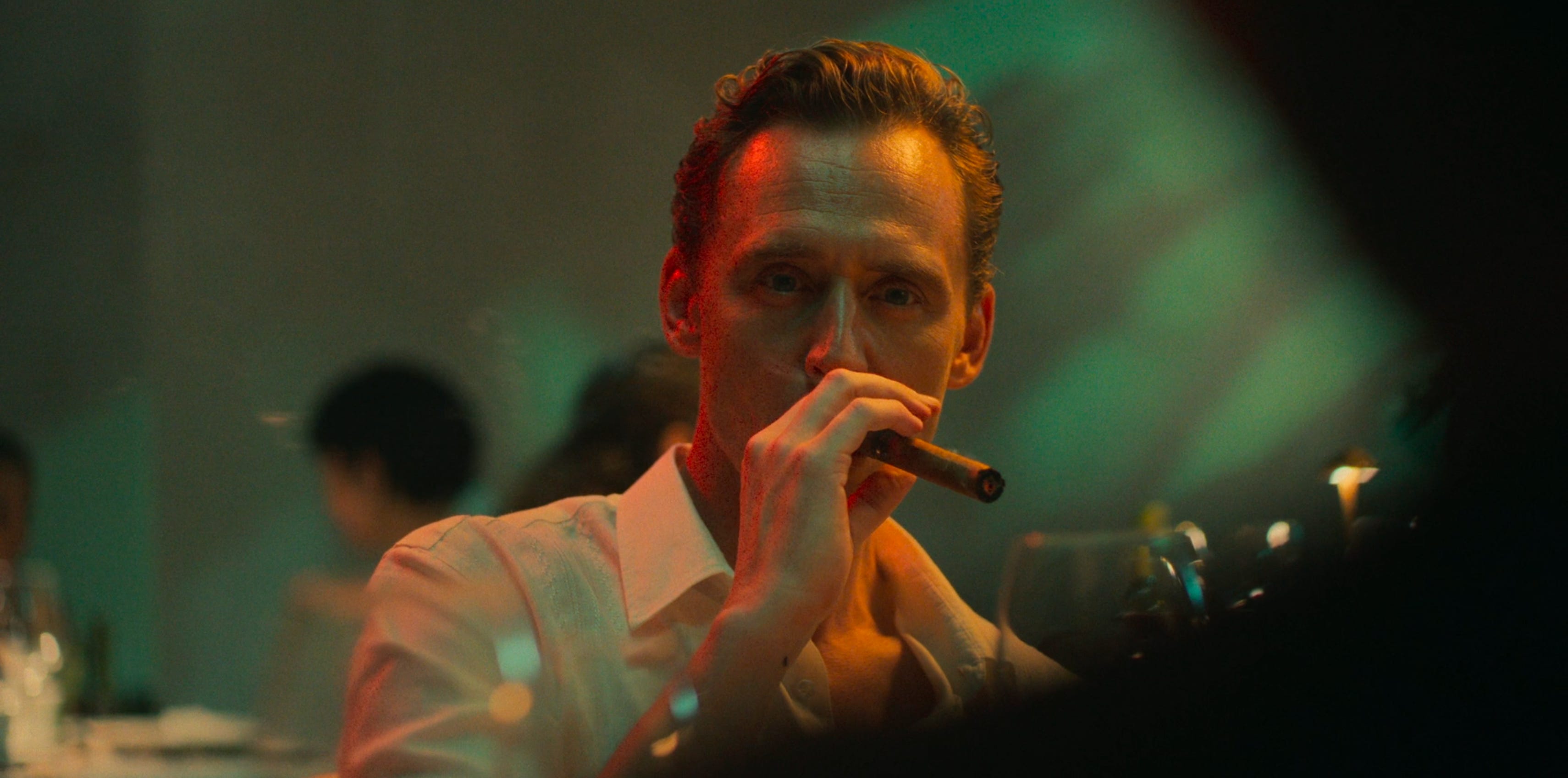
What I really wanted to develop in the show is what that does to a person. All of my work is about identity crisis. Jonathan Pine is literally taking on different identities to try and find a truth, but I’m not sure it’s the truth. I think it’s his truth. That’s what I’m interested in.
What I also feel really passionate about is the representation of women. Jed—who Elizabeth Debicki played amazingly and brought to life so elegantly in the first season —is a driver for Pine and his own morals. If you read the book, it’s really complicated, he’s almost angry at how beautiful she is. But she’s still serving a save-me role, ultimately. Even though the calibre of the performance is amazing. The same with Sophie (Aure Atika) who becomes the trigger—he’s the avenging angel because somebody killed a woman that trusted him. But I’m interested in who those women are and why they do the things they do. That was one thing I was keen to change, particularly in our lead role with Camila Morrone.
I’m also intrigued by class and the representation of class. I’m a working class director, there aren’t many of us. Like, I come from social housing. If you look up the makeup of MI6, it’s really diverse in class and in race. What we’ve watched over years and years in British shows about MI6 or MI5 is one type of person working in them. So I was interested in what that looks like when you open that up as well to be more realistic and relatable.
I love that so much thought has gone into all of this, which is exactly what I would expect based on the changes made to the second season. Can we talk a bit about the way Tom Hiddleston is shot…how intentional is the female gaze on him?
Everything’s intentional for character! I like the fact that the character is very vulnerable and exposed. So if some of that means that he gets out of bed with his shirt off and certain parts of the audience will enjoy that, it’s not as intentional as it may appear. The answer is actually probably much more mundane than you think. Because you look at that scene and go, he looks very sexy, and he looks great. It’s actually all for story. He’s buttoning up that shirt and putting the armor away, like putting away the weaponry. He’s really brave, Tom. Just like Billie, the bravest actors I’ve worked with. They really want to go there in the exploration of the character.
I love it. Corky the cat: Does he survive? Are you able to tell me that?
All I’m going to tell you is he appears like a survivalist to me. He knows where to go when things get tough.
That’s good enough for me. What are your foundational shows?
Transparent. When I watched, it felt like an American style of TV that I hadn’t seen before, telling a unique lived experience that made me suddenly understand that you could explore character and family and things in a way that I’d never seen before. As a kid, it’s the escapism of something like Fraggle Rock. It was my go-to, like, how we come together as community to escape the bad. Also Broadchurch, a British TV show where every week I was compelled by the most incredible storytelling and performances by David Tennant and Olivia Colman, the queen, who I just got to work with.
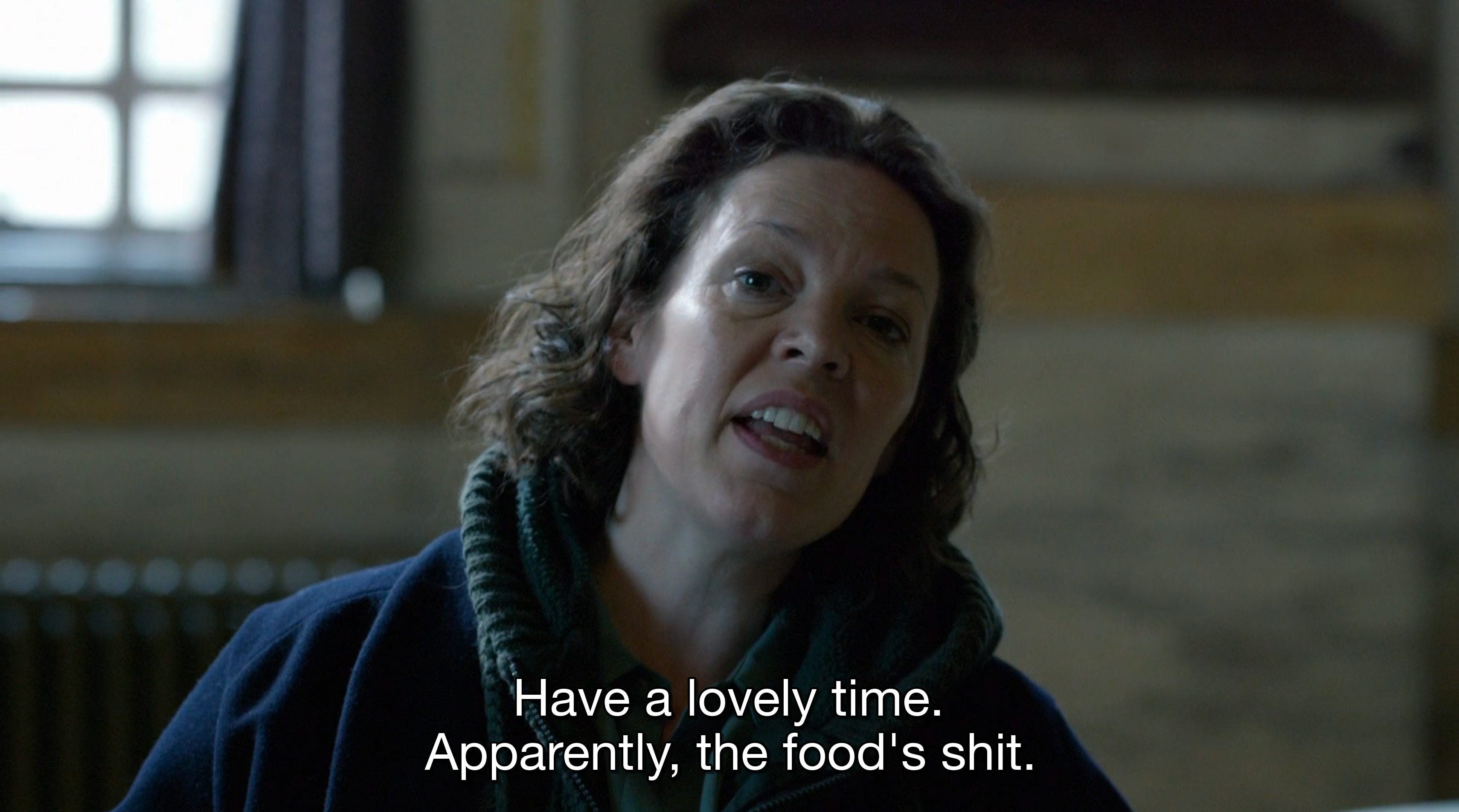
The icon! Anything on your career vision board?
I’d be lying if I wasn’t to say that the one at the top is to be the first woman to direct a Bond movie.
I will manifest that with you. Favourite TV-watching snack?
Red strawberry shoelaces, which I think in America is called Twizzlers.
This was so fantastic!!