

The TV Scholar interview series brings real-life television scholars to my newsletter to discuss their journey to television studies, share nuggets of wisdom from their research, and obviously, chit-chat about television itself.
This time I interviewed Portugal-based psychoanalyst and researcher Lucas Ferraço Nassif, who holds a Ph.D. in Literature from the Pontifical Catholic University of Rio de Janeiro, on his 2025 book Unconscious/Television, and how psychoanalysis can be a helpful lens into understanding television.1

Before we get into it: Which TV shows are you watching and enjoying lately?
The last good stuff that I saw was Industry. 100%, without a doubt the best thing that was on television for a while, because I think we are running in the low tide now. Very bad TV is being broadcasted nowadays and it’s kind of upsetting because it used to be very good like five years ago. I’m also watching animation from Adult Swim like Haha, You Clowns, and a lot of Real Housewives of Salt Lake City because, I mean, it’s the best thing there is? “Fiction” is not doing so well.
What are your foundational TV shows?
From childhood, I would say Japanese animation more than anything else. But the most foundational show would be Six Feet Under. I watched it in the first year of my PhD, so as a scholar. I was already 20-something and it hit hard in a way that I got even like…disturbed mentally in the process of watching it. I could relate to the characters, and I was feeling that too much in a way that didn’t get so well in my system. It’s a great show, I love it.
I haven’t yet lost anyone super close to me but Six Feet Under is one of those shows I know I’ll return to when I want to process grief.
It’s interesting that you mention that…I work here in Lisbon, I’m a psychoanalyst, but I’ve been working inside of academia again after finishing the PhD. I wanted to get away from academia as much as I could after finishing it. But then I started having this connection and relationship with the department of philosophy here at the university, and they have this laboratory on the philosophy of cinema and moving images. One of the researchers there got a grant from the European Union to research film and death. She had this hypothesis that to make philosophy with moving images, so time-based media, we would say it is to learn how to die.
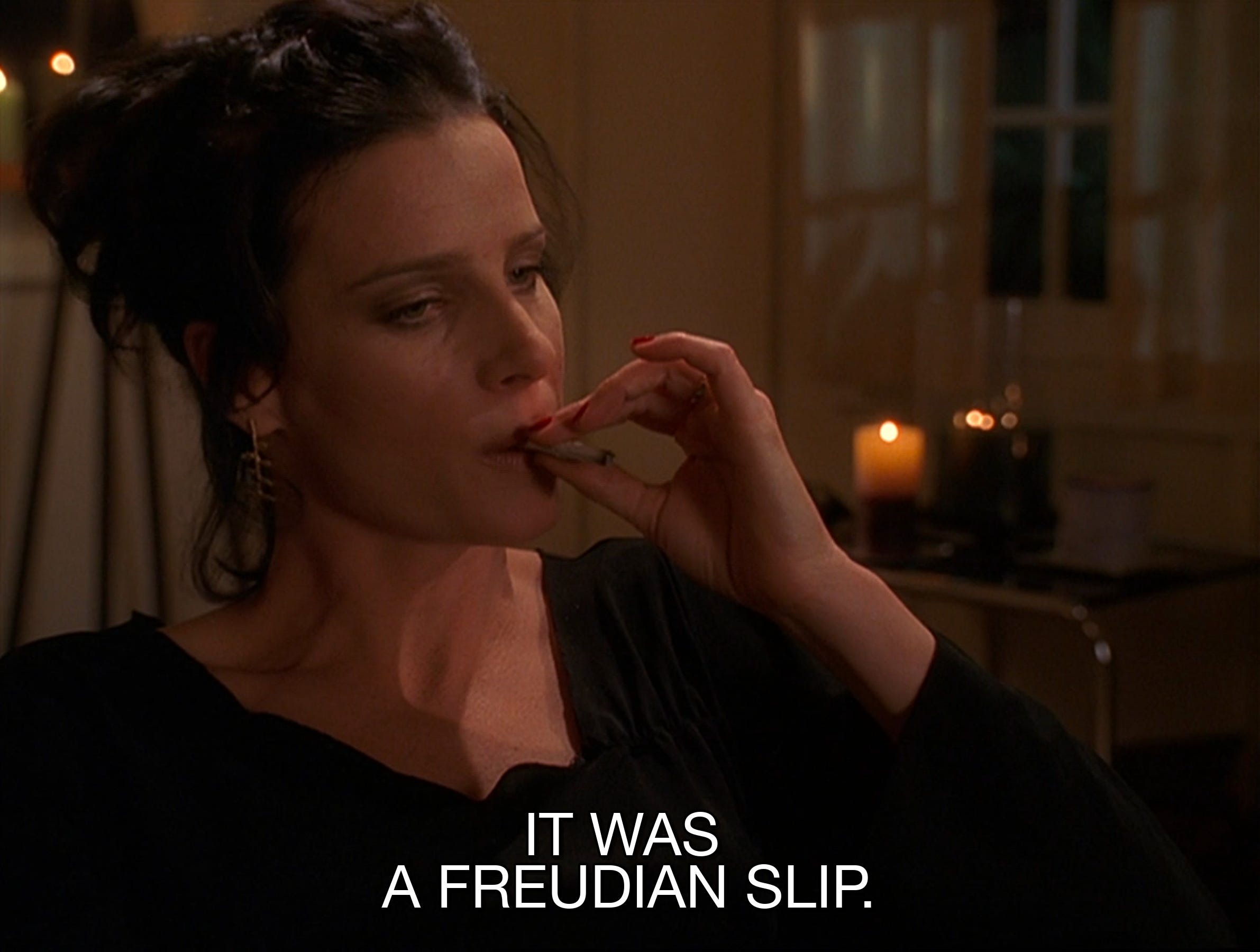
That’s how I came back, through this project. I got a position, but then…I didn’t want to work on the representation of death, I wanted to work on how television in the middle of everyday life can provoke or trigger those feelings or these affections that could somehow be related to something that you cannot represent. So that’s maybe the key figure here—you cannot actually represent death, because we don’t know how to die or what that experience is like. So Six Feet Under touches me a lot, especially with Brenda’s character. Her pathway was so tough. In a way, I couldn’t really metabolize it. It stuck out to me as a Freudian death drive2 or something, but I couldn’t actually understand her. I was kind of addicted to her story in a way that it was so death-driven beyond representation or something. Her character is maybe one of the most important characters that I’ve ever encountered.
Can you tell me a bit about your academic journey: How did you arrive to writing about and researching television?
I wrote my PhD on Chantal Akerman, a very experimental cerebral filmmaker from Belgium. She says something that maybe is the reason I wanted to work with television: We can do experimental cinema, we can be cerebral, but we cannot stay in the conceptual realm the whole time. We have to be grounded by some kind of dramatic interference and narrative, and that’s very important. Her film Jeanne Dielman, 23 quai du Commerce, 1080 Bruxelles (1975) follows a woman doing everyday chores for three and a half hours. But in the end of the film, I’m giving you a spoiler, she kills a man. We don’t really understand why, but there is this pop, overdramatic thing. I was interested in the over-the-top, sometimes melodramatic narratives that you could find in television.
I understood that I wanted to research it was because television was in the middle of everything. Television is a narrative that is in the middle of our lives, that most viewers identify with ideologically or moralistically and sometimes say, Oh, this is not good narrative. It is actually very powerful. I think it’s more transgressive than cinema sometimes because it’s in our daily lives.
On that note, I want to read you a quote I loved from a chapter that is a transcript of a talk you gave, and I’m hoping you might expand on it:
“Twin Peaks is a work of art for television, much more than it is for the cinema, it enters our houses, it is made to be watched in the middle of things. This is very subversive…Television is capable of producing something that is maybe much more disruptive than cinema. Television has a body. The TV. The TV set. The box. You can hold it, use your hands to grab it much more than a projection at a cinema theater.”
I was writing this book about television, and then we interviewed this professor from the University of Chicago, Thomas Lamarre. He’s a very special professor, and he accepted our invitation to come here to Lisbon and give a workshop on Japanese animation and Japanese cinema, but with animation and pop culture. He’s the one that made me really see that we don’t have to go inside of the cinema theater to produce subversion. Politically, television is the art that makes us more open to what we don’t take seriously normally, at least as seriously as the cinema. So I was very interested in how pop culture can be considered a “minor art” but be very transgressive, because it’s very pop, because it’s very capitalistic. So I can talk about Twin Peaks, but I can also talk about anime. People might say, oh anime is for young adults, but there’s a bunch of stuff for young adults that’s actually good.
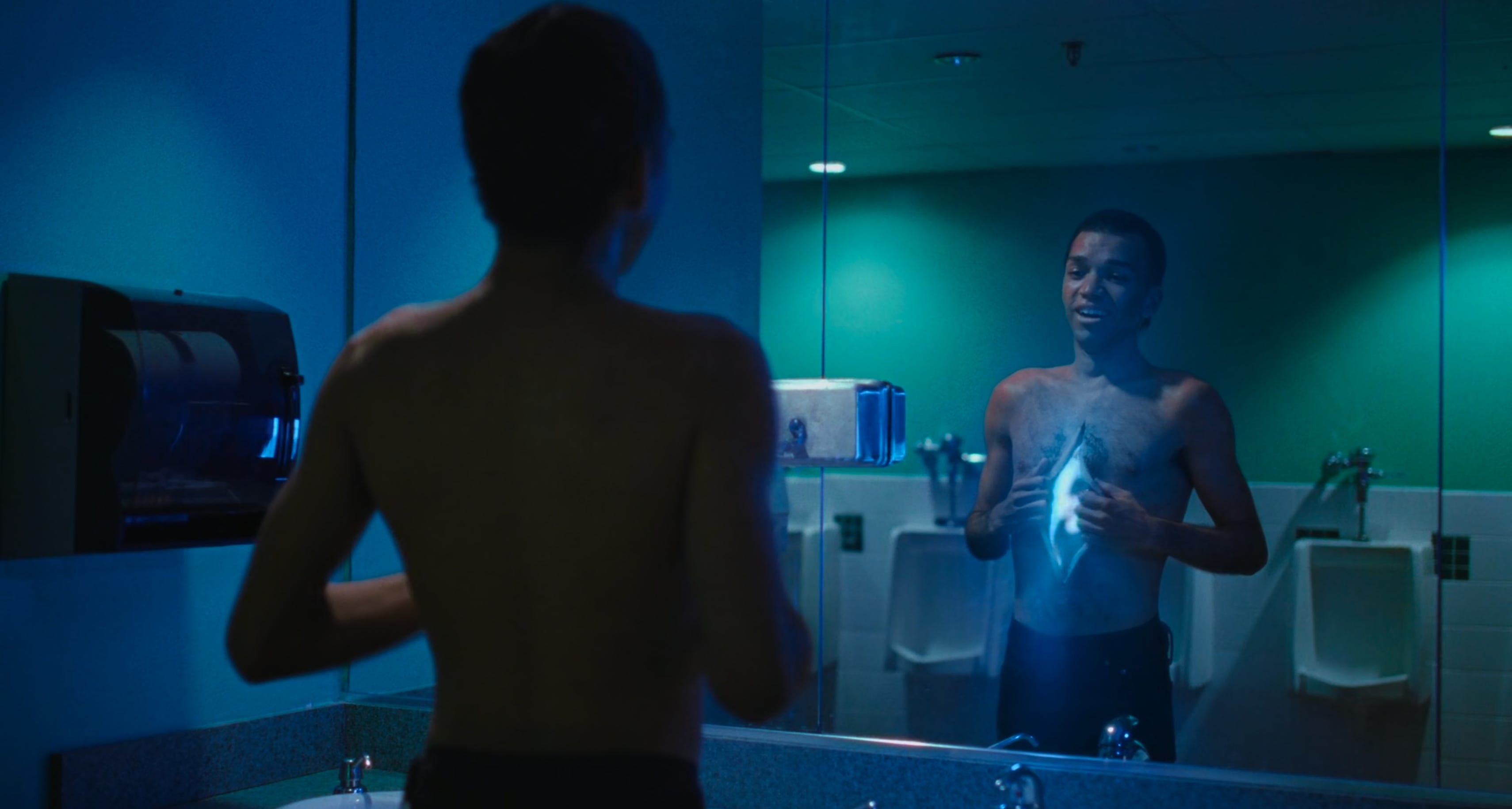
Did you see I Saw the TV Glow? There’s this scene where the main character opens their body, and there’s all of this electromagnetism inside. People can read this scene as, okay, this body was colonized by capitalism and television. But I actually think it’s totally the opposite. This body learned how to live because it was filled by this libidinal television possibility of life. Television was what kept the character alive in the end, it was because of television that this character could produce another psychotic reality or artistic reality that is alive, a form of expression. I love that they learned how to subvert it. It’s not a colonizing capitalism that’s destroyed this person, it’s actually the opposite. I think David Lynch was very aware of this when he made Twin Peaks. If we look at that scene from I Saw The TV Glow of opening and seeing the television inside, and if we also look at the last scene of the second season of Twin Peaks, when Cooper is hitting his head against the mirror….television is a black mirror that we have everywhere. We can, in a way, confront and defeat and see the body that we have inside of ourselves, and maybe know how to harness those, those energies and forces. I don’t know. [Giggles].
Why do you think psychoanalysis is a useful approach to television?
First of all that’s very important in your work, because you are a TV scholar that is looking for fiction and narrative. We can say that maybe The Real Housewives of Salt Lake City isn’t fiction, but of course, it is fiction. There’s beautiful mise-en-scene and editing work that I think Bravo does amazingly. So I think what we can learn about psychoanalysis with television is how we can do narratives, and how can we practice narrativization and building stories.
Psychoanalysis is pretty much telling stories. Going to your analyst and talking about your life, about your family, your psychoanalyst should understand that it needs something more, or something beyond, something beyond your family drama with your mom. Good television provokes this disruption. For instance, in Sex and the City…they don’t have families. Of course, they talk about it, and there’s Miranda’s mother, but we don’t see them. They have New York and sexual operations they’re investing in there. In a way, psychoanalysis as a practice needs to listen to the family plot, but trace a line the whole time trying to explore further, beyond the traumatic experience of childhood. Good TV does that.
Six Feet Under, for example, is very well structured as a family drama. But there’s something else there. There’s something so bizarre and strange in the way that family relates. Even in the first season, when the mother sees the son giving oral sex to his girlfriend…it’s a family drama that is always twisting how we would see family in television. So it kind of folds the family drama within the family compound (the house). It makes over-the-top complexities beyond the family drama, in a way, it explodes.
I think I get it—family life in particular is so rich to explore, on and off the screen. There is kind of a gap in family dramas nowadays, it doesn’t seem to be a sexy genre to explore on television.
In Industry, we have Harper and Yasmin. We have all the family drama from Yasmin, and we have family drama from Harper, but we rarely see anything beyond her brother. I read somewhere that they wanted to cast Jennifer Jason Leigh as her mother but decided not to. It’s so brilliant that they didn’t do it. Harper is a little bit like the Sex and the City characters, she has to be displaced to build something new. And you see that Yasmin is not capable of doing this, and now she’s becoming Ghislaine Maxwell. She’s so fucked up in this family plot that she cannot get rid of. In a way, Harper…she’s doing it. She’s producing another possibility outside of the US, having this new, very bizarre and difficult life in the UK, but she’s doing it with new alliances.
How did you settle on titling your book Unconscious/Television?
I was about to put only Unconscious as a title. As I was developing the proposal for the publishing house, I said, okay, I need a media interface to think that the unconscious could be this media interface as well. So it is to think that television can be also operating as an unconscious, as this infrastructure of our aesthetic body that is actually outside of the body; that you are relating it as an affection, as a haptic, energetic thing.
Can you tell me about selecting your case studies and why you chose to focus on those specific shows?
I have three case studies: Neon Genesis Evangelion, a very famous anime, Twin Peaks, and Netflix’s Devilman Crybaby. Evangelion is a very canonical work from Japanese animation from the 90s and I love it. There was cable in Brazil in the 90s, or more little small antennas that would receive television from several places. There was this channel only from Latin America called Locomotion, a channel for animation. I watched Evangelion there, I was very young, like 10, but it was very foundational. It’s a very neurotic show, because it is a show about the father, the son, the mother, the mother is the robot. Even though Evangelion is so good, the main character is never able to actually get rid of this father-mother-son triangle. I wrote about Asuka, another character in the show, the woman that is able to, in a way, destroy humanity by making an alliance with the villains. That’s my thesis in the chapter.
After Evangelion I thought I should talk about another anime that is a little less neurotic, more psychotic. Devilman Crybaby is a very important manga that was adapted as OVA (Original Video Animation), which was very popular in Japan in the 80s. What Netflix did many years after was make a very good anime adaptation with this, it’s brilliant. In this anime we could really elaborate on this new conceptualization of the unconscious; I write about how demons make fusions to produce weapons against humanity. I could write a lot about this anime.
For Twin Peaks: The Return, and I especially explore the episode of the atomic bomb (episode 8), not only as a representation of the atomic bomb, but also as how David Lynch builds the strategies of Twin Peaks. He’s depicting the radioactivity of the atomic bomb and how it explodes the way that we conceptualize, for instance, even weapons or the universe. So because we are dealing with atomicity, we are dealing also with the way that Lynch structures his narratives. It’s an episode that comes out of nothing. Instead of exploring a character, he goes somewhere else, but it makes a lot of sense. I love it.
Do you have any favorite or seminal texts within psychoanalysis that are relevant to television that you can recommend?
I would say that you have to read the little text from Lacan about the mirror image, The Image of a Voice: The Mirror Stage. It’s a text from ‘49 that Lacan gave as a lecture, and afterwards it was published. Lacan conceptualizes narcissism after Freud. So it is the child looking at their image in the mirror and also being confirmed by the caretaker that this image makes sense; how the child produces the gestalt of the body. So the body, it’s not fragmented anymore. It is one thing, a thing that makes sense. That’s the neurotic narcissism that Lacan explains.
When thinking about narratives on television, it would be a great text, especially if we think that, for instance, a show that used to be good, Black Mirror. If we’re thinking about this mirror image and how the black mirror is also a mirror of a virtuality of something that is about to happen that we don’t yet know. It’s very interesting when we start exploring this notion of the mirror image that Lacan conceptualized. It can be a difficult text, but it’s so short that you can read it more and more, forever.
What is your favorite television-watching snack?
Guacamole and Doritos!
Lucas Ferraço Nassif holds a Ph.D. in Literature from the Pontifical Catholic University of Rio de Janeiro. He is a researcher in the ERC project FILM AND DEATH and an integrated member of CineLab - Laboratory of Cinema and Philosophy, part of the NOVA Institute of Philosophy, and a member of the Portuguese Center of Psychoanalysis. Director and editor of the films Reinforced Concrete, Being Boring, and Unfamiliar Ceiling/The Beast; and author of the book Missing Links, published by Barakunan, and awarded by the Association of Moving Image Researchers [AIM] in Portugal as the best monographic book of 2023. In 2025 his book Unconscious/Television was published by Becoming Press. Lucas Ferraço Nassif’s investigations happen between psychoanalysis and schizoanalysis, operating with the clinical approach to the unconscious that aims at the entanglement of art and the production of thought.
From the Chicago Psychoanalytic Institute: “Sigmund Freud introduced the concept of the death instinct to explain the inherent drive toward self-destruction and aggression present in all living beings. This theory, while controversial, offers profound insights into human behavior, including the repetitive reliving of painful experiences, self-sabotaging tendencies, and destructive relational patterns.”
Fantastic interview! Loved the Twin Peaks commentary!!